
How Moreno Valley Residents Are Found
Different records catch different people in Moreno Valley. A deed lists parties, not a whole household. An assessor parcel page pins down a place, not whoever lives there now. A court index ties one name to one case. A city directory or census entry can preserve a household from an earlier era. So the first move depends on the question. Is it about a parcel owner, a registered person, a public case, a vital event, or an address that shifted over time?
Good notes keep source, date, geography, and identifier beside every hit. A shared name alone cannot merge two people. That habit prevents mix-ups. A mailing address is not a situs address either; situs is the parcel's physical spot. When the hunt widens from one address to a whole street, the Moreno Valley by-street walkthrough keeps parcel and deed steps in order.
- Write down the exact name, middle initial, suffix, alias, address, and time period already known.
- Run the address through the Riverside County assessor search to obtain parcel facts, an APN, or a PIN.
- Use the recorder index for named parties, then verify the instrument and legal description in an ordered copy.
- Use court, business, professional-license, vital, or restricted voter channels only for the question each record can answer.
- For an older household, search Moreno, Sunnymead, Edgemont, and Alessandro as predecessor terms, then pair directory evidence with census or obituary leads.
- When a needed record is not online, request an identifiable existing record from the custodian instead of asking an agency to create a resident list.
The sequence separates proof from clues. An official copy proves what a custodian recorded. A directory entry, business filing, or unclaimed-property match only points at a person or place, and each needs corroboration. Holding that line keeps a Moreno Valley residents directory honest for family history, reconnecting, parcel research, and civic records work.
Moreno Valley Records Offices
Moreno Valley records sit at three government levels. City Hall keeps municipal actions, permits, planning material, and code records. Riverside County holds the assessor roll, recorded documents, clerk filings, court data, and local vital copies. California offices control voter-file access, professional licenses, business entities, state vital records, and confidentiality programs. The split matters because no single office can certify a complete list of Moreno Valley residents.
The Riverside County Assessor-County Clerk-Recorder is the main property and recorded-document custodian. Gateway Riverside, at 2724 Gateway Drive in Riverside, is the key location for full-service research and records before 1975. County phone lines are 800-746-1544 or 951-955-6200 for the assessor and 800-696-9144 or 951-486-7000 for clerk-recorder questions. City Clerk staff work from 14177 Frederick Street and can route city records requests.
Moreno Valley City Clerk
14177 Frederick Street
Moreno Valley, CA 92553
951-413-3001
Riverside County ACR
Gateway Riverside
2724 Gateway Drive, Riverside
951-486-7000
California Elections Access
Secretary of State and Riverside Registrar
Purpose-limited voter files
Personal status online
City Hall inspection works differently from a county counter search. Records may be electronic, paper, or stored off-site. The City Clerk says some retention is permanent. County staff can explain search modes and copy routes, but the custodian still decides what is disclosable, what needs redaction, and which office holds the record.
Moreno Valley Assessor Search Fields
The Riverside County Assessor Property Search is the best first stop when an address is known. It takes one of three keys. A street number with a street name locates a parcel. An APN works too. So do the first nine digits of a PIN. Either anchor supports later deed work. The free online result is a parcel record, not an owner-name directory. Ownership, the assessor says, is inspected in an office under Revenue and Taxation Code section 408.
The online record can show the assessment or PIN, APN or GeoCode, situs address, property type, legal description, subdivision, lot or parcel, map book and page, acreage, valuation year, value history, tax information, similar sales, and a property report. Valuation data updates weekly. They tie a street label to a parcel identity.
| Search key | Type | Required | Format note |
|---|---|---|---|
| Assessor Parcel Number | Text | One key | Use the APN format shown by the county. |
| Property Identification or Assessment Number | Text | One key | Use the first nine digits and omit the dash or check digit. |
| Property Address | Text | One key | Street number plus street name gives the best result. |
The county's assessor search interface shows why a Moreno Valley residents directory must keep owner, mailing, and occupancy claims separate. The three rarely match.
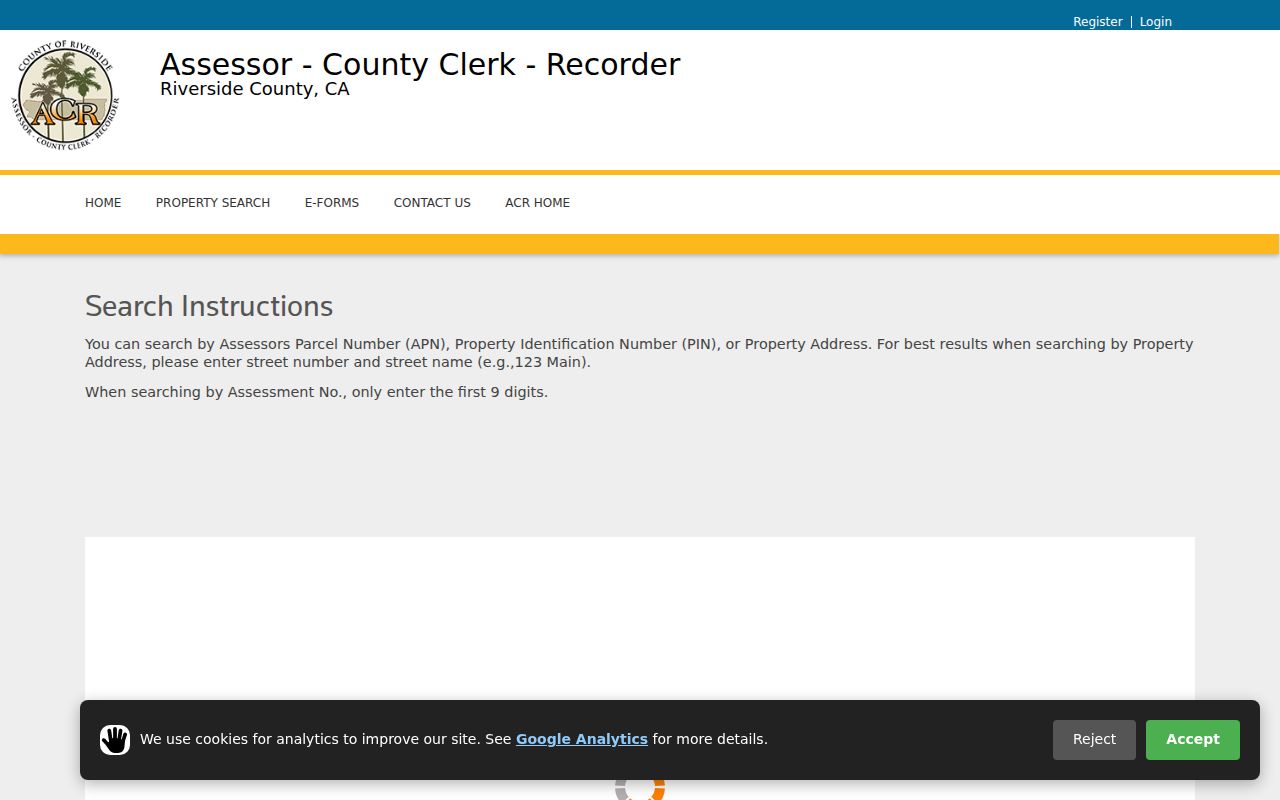
The parcel view supplies a clean starting key. It names no renters, roommates, minors, or utility customers, and the online page suppresses the owner name and mailing address. That silence sends the search onward to the next custodian.
- Roll
- An official list maintained for a defined purpose, such as assessment or registration.
- Parcel
- A mapped unit of land identified by an APN, legal description, and related map data.
- Situs address
- The physical location of the parcel, which may differ from the mailing address.
- Index
- A finding aid that points to a document or case; the indexed fields are not the complete record.
Moreno Valley's 1974 Recorder Cutoff
The Riverside recorder index is the tool that turns a Moreno Valley parcel into named parties. Its online coverage opens on January 1, 1974. You can query it by name, document number, document type, recording date, or map type with book and page. Exact name searches follow the order you type, while advanced mode widens a surname with a first initial. Operators include plus, minus, dollar sign, and question mark.
One limit matters most. The index covers names, not addresses or APNs. Convert an address to a parcel and its assessed owner first. Then search that person as a grantee. Order the deed or lien image and verify the APN, legal description, party role, and recording date before chasing the earlier grantor. The free index points to a record. Copies cost money. A regular or certified copy runs $8 for the first page and $1 for each additional page, with $2 added for certification.
Access comes several ways. Online ordering, mail, a drop box, office terminals, and counter service are all documented. Online orders average 48 hours before mailing. Office computers reach back to 1975, while the web wording starts in 1974. Gateway Riverside is the fallback for 1974 and earlier books and images. A pre-1976 mail request without a document number should list complete party names, an estimated recording date, the document type, and any helpful parcel number; staff limits that search to two years past the estimate. The one-year gap is a Moreno Valley quirk. The Riverside official-records portal and the Gateway counter serve different stretches of the same backward trail.
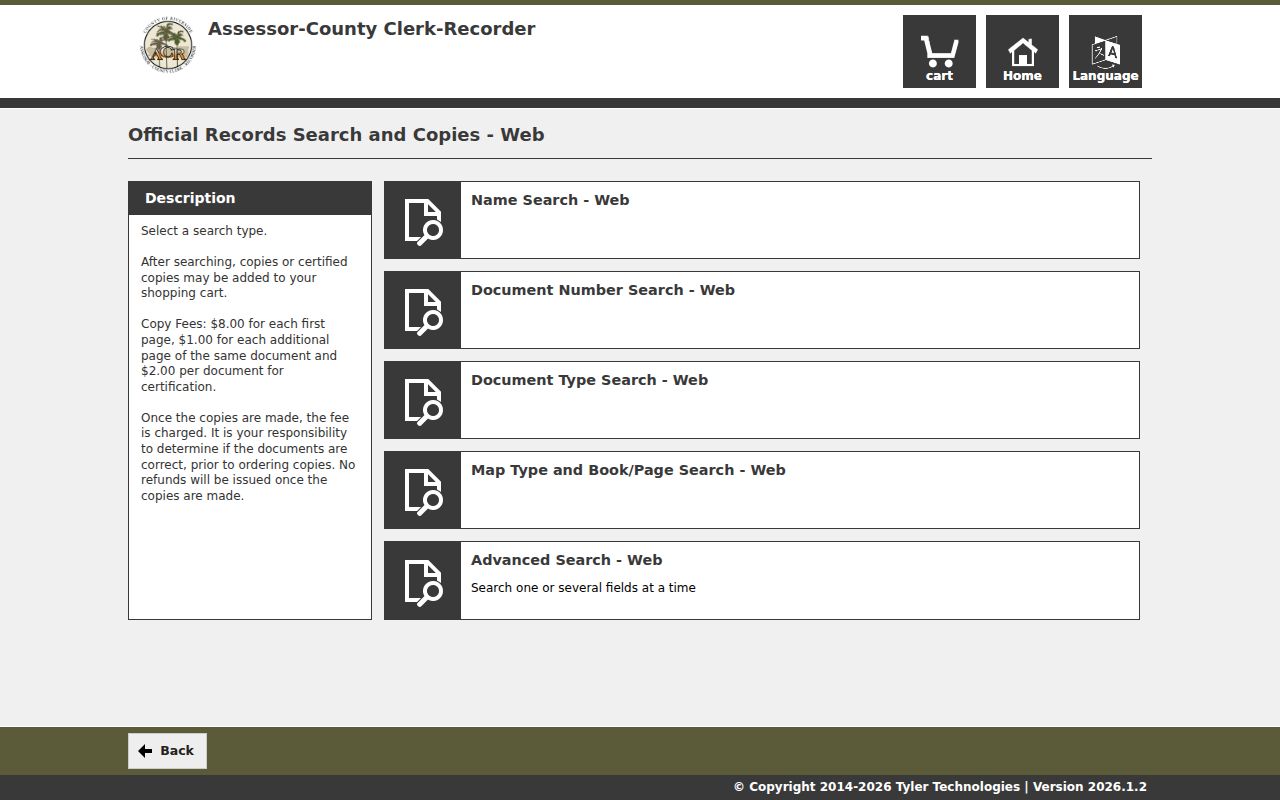
Research tip: Treat Gateway Riverside as the required pre-1975 handoff. A current web result cannot prove that an older deed does not exist.
Moreno Valley Court Name Searches
Riverside Superior Court adds case context to a Moreno Valley resident lookup. The ePublic Access portal offers plenty. An account-based index covers person and organization names, a register of actions works by case number, and a calendar lists current and future hearings. Permitted nonconfidential documents open as well. Probate notes appear too. The Moreno Valley Courthouse at 13800 Heacock Street takes small claims, unlawful detainers, civil traffic, and related local matters. A Moreno Valley address still does not guarantee that every civil, criminal, family, or probate matter was filed there.
Credits pay for name searches. One search costs $1. Five cost $3.50, ten cost $5, and seventy-five cost $25. Unlimited access for 30 consecutive days runs $250. A case-number lookup is free. Downloads cost $1 per page for the first five pages and $0.50 after that, capped at $50 per document. Portals allow 30 searches or lookups per five minutes. Web data is not the official court record. A certified copy needs a clerk request. Use the Riverside Superior Court public-access gateway to test a name, capture the case number, and inspect the register of actions. Sealed, confidential, juvenile, adoption, and restricted family material never shows as ordinary public results.
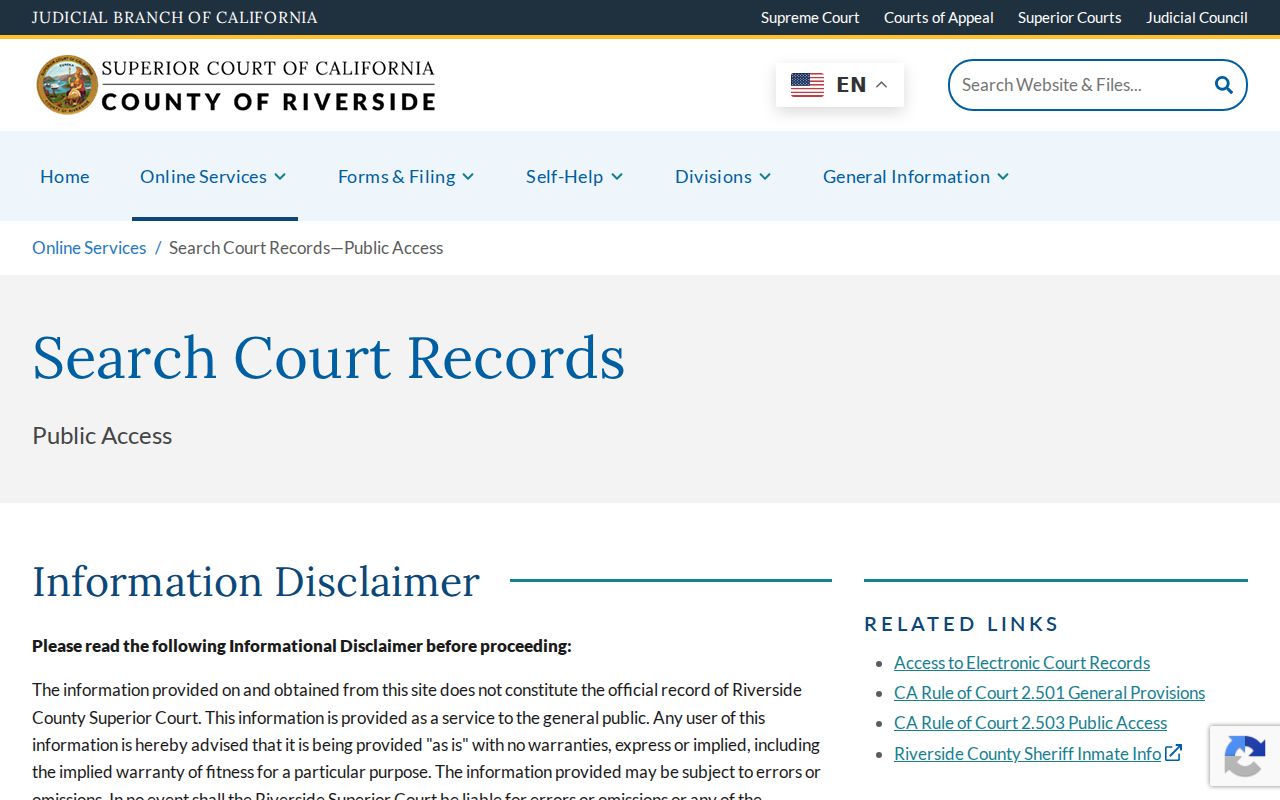
A court hit is only a lead. Treat it as solid once party role, filing date, case number, and geography line up. Keep the identifier handy for any certified copy request.
Moreno Valley Vital Record Leads
Vital records answer event questions, not residency ones. A birth, death, marriage, or divorce record will not tell you who currently lives in Moreno Valley. For that, the residents directory path runs through property rolls and the street directory instead. Riverside County Assessor-County Clerk-Recorder issues county copies of vital records. The California Department of Public Health is the state issuer.
California splits its copies into two types. This happens under Health and Safety Code sections 103526 and 103526.5. An authorized certified copy carries legal weight for an eligible requester. An informational copy is stamped as unusable to establish identity. Either way, these are event records, not a resident lookup tool.
| Record | Custodian | Access boundary | 2026 fee |
|---|---|---|---|
| Birth in Riverside County | Riverside ACR or CDPH | Authorized or informational copy | County $34; state $31 |
| Death in Riverside County | Riverside ACR or CDPH | Authorized or informational copy | $26 |
| Public marriage | Riverside ACR | County marriage channel | $19 |
| Confidential marriage | Riverside County Clerk | Limited statutory access | $19 |
| Divorce | Superior Court or CDPH abstract | Court file and state certificate differ | State abstract $18; court varies |
Online applications use a certified-copy type selector plus cards for birth, death, public marriage, and confidential marriage. Moreno Valley applicants follow the same steps. Identity verification is required for an online authorized copy. In person, start with an application and order number. A government ID is needed for an authorized copy. Mail and drop-box requests need the correct application, a notarized statement where required, and a check or money order payable to Riverside County Assessor-County Clerk-Recorder. The state instructions also supply VS111 and VS20 forms. Before July 1905, county registers, archives, newspapers, church records, cemeteries, and genealogy collections become the lead sources. An index lead never creates eligibility for a certified copy. For the state path, the California vital-records ordering information shows whether the event belongs with the county, CDPH, the clerk, or the court.
California Voter Rules for Moreno Valley
California publishes no casual street-by-street voter roll. The My Voter Status tool verifies your own registration. A voter-information file goes only to an eligible requester with an election, scholarly, journalistic, political, or governmental purpose. Elections Code sections 2188 and 2194 govern release, and commercial use is barred. Protected public-safety and Safe at Home voters stay excluded. An allowed file can be rich. It may hold a registration county, registration ID, name, residential and mailing addresses, phone, email, language preference, birth date, gender, party preference, status, registration date, precinct, registration method, birthplace, status reason, vote-by-mail status, and participation history. Ballot choices never appear. Driver-license and state-ID numbers, Social Security numbers, and signatures stay confidential. A record proves registration at a point in time. It cannot prove who physically occupies a Moreno Valley address on the day you search.
A voter-status lookup is personal, not a browsable Moreno Valley residents directory. It answers one question for one requester. Safe at Home members skip ordinary online registration. They request a confidential form from the Secretary of State instead. Any permitted file request must state a defined purpose. It must stay within the statutory limits that protect the roll.
Current Moreno Valley Resident Directories
Each current record answers a different question. The assessor ties a parcel to its assessed owner. The recorder names the parties to an instrument. Voter rolls remain restricted by purpose, and city or business records show public and commercial affiliations rather than households. Even unclaimed-property entries offer only a historical name and address clue, so no single source works as a complete resident lookup for Moreno Valley.
| Source | Who or what it lists | Keeper | Access |
|---|---|---|---|
| Assessor parcel search | Parcel, situs, values, legal and map facts | Riverside ACR | Free web; owner inspection at office |
| Recorder index | Parties, document type, date, number | Riverside ACR | Free index; copies ordered |
| Voter information file | Permitted registration and participation fields | SOS or Registrar | Certified purpose only |
| City records and licenses | Public actions, permits, business premises | Moreno Valley | Portal or focused request |
| Unclaimed property | Owner name and holder or past-address clue | California Controller | Free name search |
A name alone rarely settles anything. The State Controller's unclaimed-property search can tie a name to a holder relationship or a past address, though a match never proves current residence in Moreno Valley. A record identifier, a date, and a geography together beat a bare name every time.
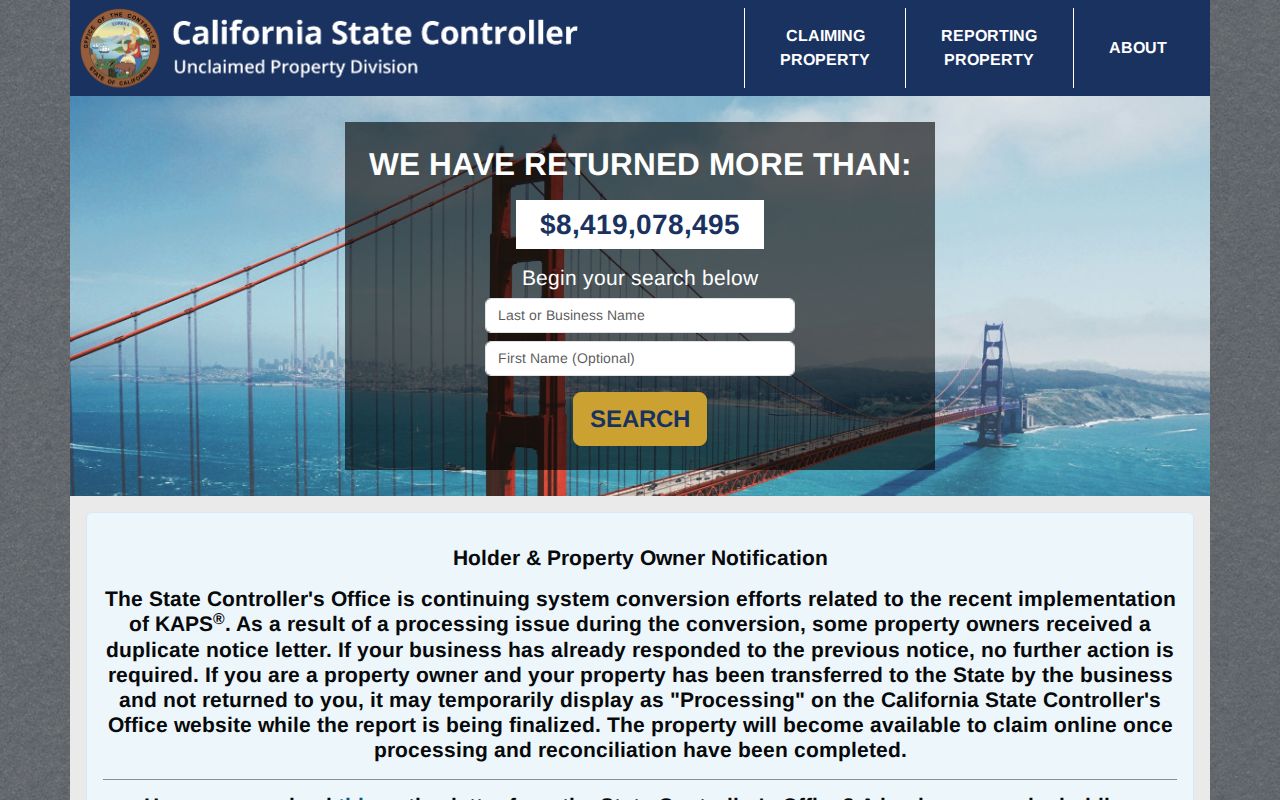
That distinction keeps the Moreno Valley residents directory honest about limits. No current roll lists every household in one place. Pick the source that fits your question, then corroborate with a second independent record when lawful and appropriate.
Moreno Valley Business and License Clues
Moreno Valley lookups often hit a wall of shared surnames. Business records help sort them out. California bizfile Online covers corporations, limited liability companies, limited partnerships, and nonprofits. It is searchable by entity name or file number. No account is needed for basic viewing. Advanced filters narrow results by entity group or type, status, initial-filing date, begins-with phrasing, and publicly traded disclosure. Treat a registered-agent or business address as an affiliation clue. It is not proof of residence.
The California Department of Consumer Affairs License Search works by board or bureau. It also works by license type, license number, business name, first name, last name, or registry number. Advanced options add cities, counties, status filters, public records, disciplinary actions, and public documents. A result may show current or expired status. It may show issue and expiration dates, an address of record, and any disciplinary documents. For a business name tied to a premises, the Riverside County fictitious-business-name portal and the Moreno Valley business-license unit add another layer. Cross-checking these with a residents directory entry can separate a workplace from a household.
The California DCA license search shows how a professional record can corroborate a name. It can also corroborate a location.
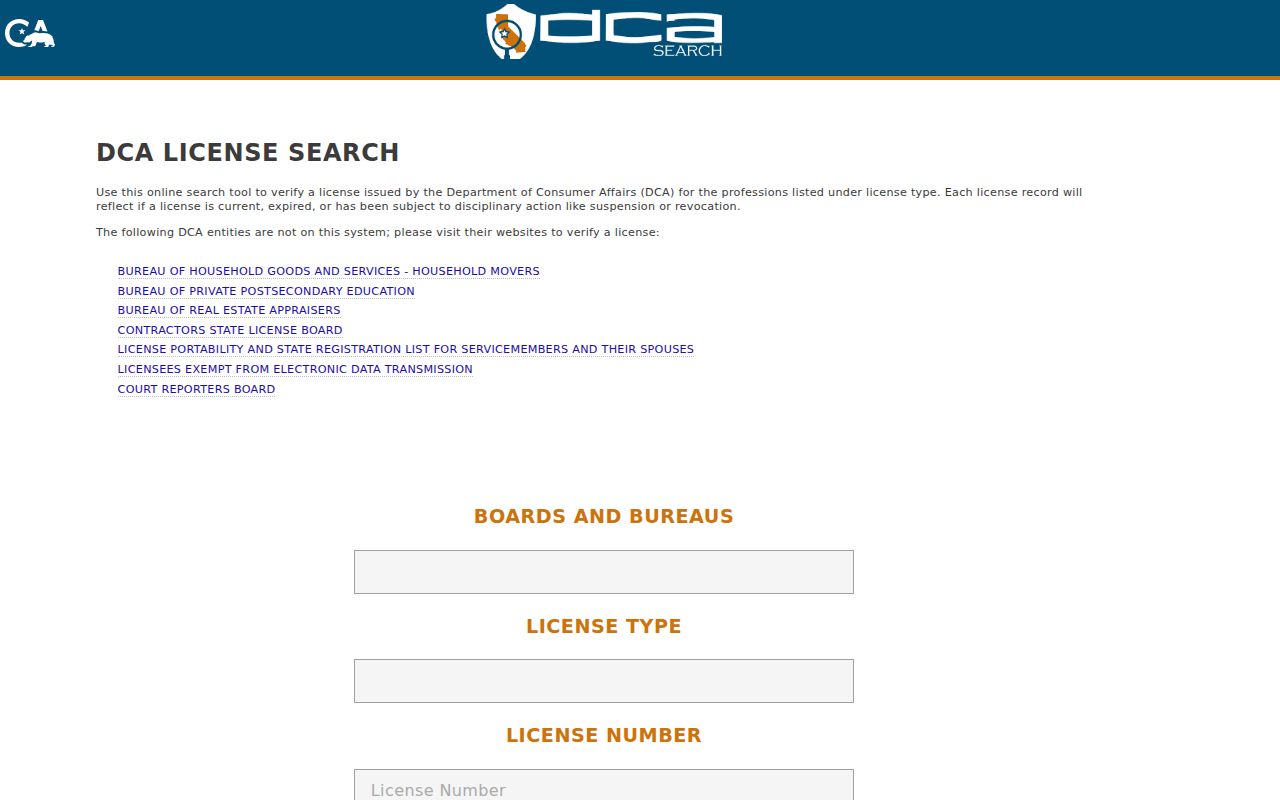
A license result confirms a credential and an address of record. It cannot prove that a person occupies a particular Moreno Valley parcel. The California Secretary of State business search supplies a separate entity trail worth checking.
Read business filings alongside assessor, recorder, or court identifiers. Overlap can confirm two records describe one person. The gaps keep a business connection from being mistaken for a household address in a Moreno Valley residents directory.
Pre-1984 Moreno Valley Name Searches
Moreno Valley incorporated on December 3, 1984, combining Moreno, Sunnymead, and Edgemont. Older residents and addresses may sit under a predecessor community, Riverside County, or a census enumeration district. They may not appear under the modern city name at all. A historical residents directory search limited to "Moreno Valley" can miss the records. Those records may explain a family or property trail. Population growth reshaped the record landscape too. Moreno Valley counted 18,871 people in 1970 and 49,702 at incorporation. An estimated 214,263 people lived there in 2025. The point is not to treat census totals as a resident list. Expect sparse early city directory coverage. Expect thicker post-1980 permit and subdivision records, and a larger municipal series after incorporation. Search predecessor terms, county custodians, and the right year together.
Place-name check: Before 1984, rotate Moreno, Sunnymead, Edgemont, Alessandro, Riverside County, and the relevant census district through the same name search.
Moreno Valley's Laserfiche Upgrade
City records tie a name to a parcel, a project, and a public decision. The Moreno Valley City Clerk keeps agendas, council reports, resolutions, ordinances, and minutes. The office also holds requested administrative files. Laserfiche lets anyone browse, search, retrieve, and print what is available. Community Development supplements this with permit, planning, code, and property links. The business-license unit maps a business name to its premises.
On March 9, 2025, Moreno Valley unveiled an upgraded request system. It was built on a Laserfiche online form and a redesigned searchable portal. Requests can still travel the old routes: email, fax, telephone, or the second-floor clerk counter at City Hall. Use the legacy form when it fits. Expect an initial determination within 10 calendar days. Unusual circumstances allow a 14-day extension. Inspection at City Hall is free. Paper copies run $0.10 per page plus postage.
Start at the Moreno Valley public-records gateway when a city record is identifiable. The gateway also serves when a record is not yet searchable in the portal.
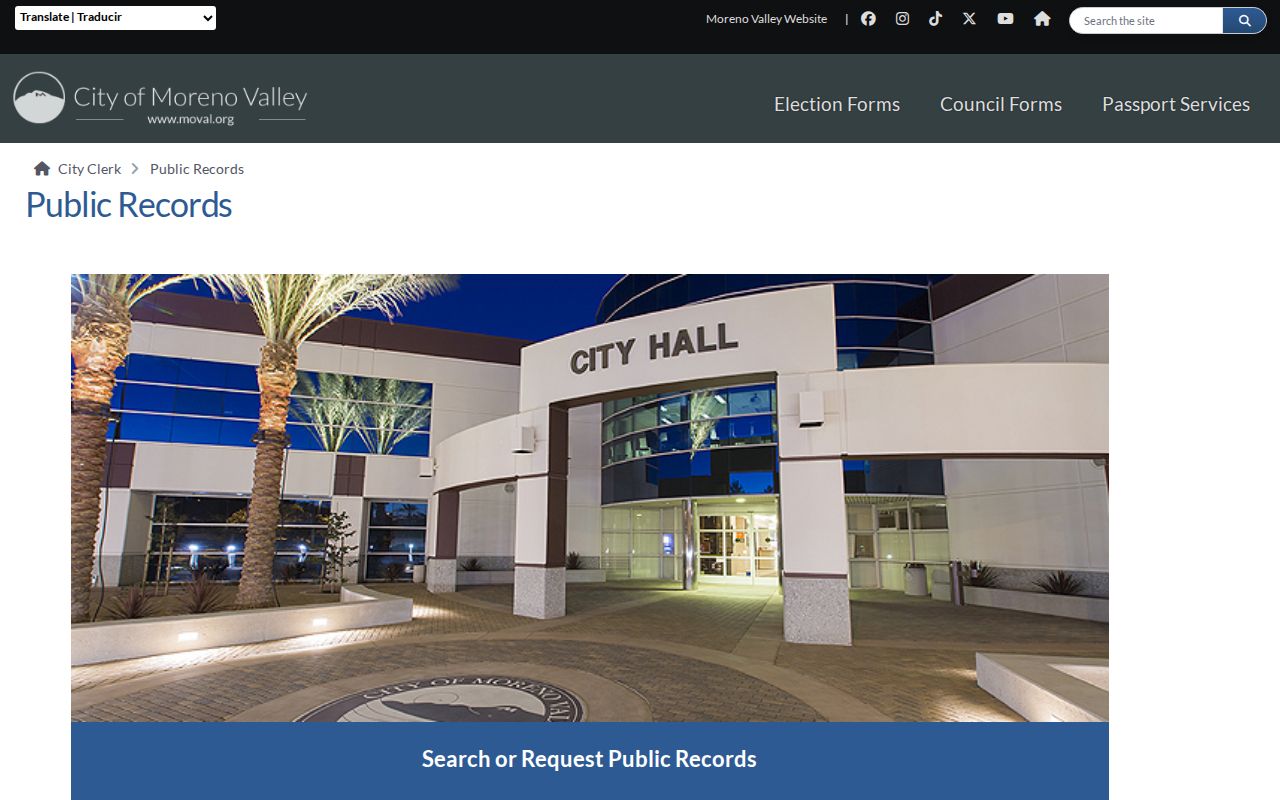
A tight request works best. Name the record type, the date range, the department, and any known address or project. The city will not build a new list for you. Exempt material may be withheld or redacted. For land-development research, plans can be viewed on premises. The typical turnaround is 10 business days, and extensive requests take longer.
Protected Moreno Valley Residents
Not every Moreno Valley resident leaves an ordinary public trail. Safe at Home gives eligible participants a substitute mailing address and mail forwarding. The program also provides a service-of-process agent and confidential voter registration. Under Government Code section 6209.5, the program can also shield certain deed addresses. What it cannot do is erase records that were already public. Assessor owner suppression and voter-file exclusions are access controls. Treat them as deliberate protections rather than search errors.
California's Public Records Act, Government Code sections 7920.000 through 7931.000, opens existing records to requests. It preserves exemptions and redactions while doing so. A well-built request names a record, a field, and a date range. It cannot force an agency to invent a residents directory. Court, adoption, juvenile, confidential vital, and protected-voter records can stay closed. Even a careful request may hit those walls. Knowing where the law stops saves frustration in any Moreno Valley lookup.
Lawful-use limit: Public availability is not permission to stalk, harass, threaten, or harm anyone. Verify a record with its custodian and use it for a lawful personal, family-history, property, or civic purpose.
Corrections belong with the source custodian. Save the URL, case number, document number, APN, license number, or request ID first. Then ask the assessor, recorder, court clerk, elections office, license board, or city clerk about its correction process for the record in question.
Historical Moreno Valley Directories
Historical directory evidence works best when the place name matches the year. Riverside City Directory references run from 1906 through 1955, with cited examples from 1947 and 1951. Luskey criss-cross examples appear in 1951, 1952, 1955, 1963, and 1966. No continuous Moreno Valley run exists across those years, though. Library of Congress Riverside telephone books cover selected periods in 1950-1953 and 1956-1957, and the later locality list omits Moreno, Sunnymead, and Edgemont.
The Moreno Valley city directory collections page keeps the historical shelf, FamilySearch fields, local library lineage, Genealogical Society obituary collection, and NARA Riverside resources in one place. A directory entry can preserve a name, an occupation, and an address. A disappearance from the street directory may mean a move, a death, an omission, or an unpublished telephone listing. Pair the entry with the 1950 census, a deed, a permit, an obituary, or probate before settling on any conclusion about past residents of Moreno Valley.
Seven Moreno Valley Research Checks
A defensible Moreno Valley residents directory search ends with a short audit of the evidence. These checks keep a useful clue from turning into an unsupported identity claim about neighbors, past residents, or property owners.
- Confirm the geography, including the city, county, predecessor community, ZIP, or census district.
- Keep the original spelling, initials, suffixes, aliases, and name variants.
- Record the source custodian, URL, date searched, and result identifier.
- Separate situs, mailing, business, registration, and listed-directory addresses.
- Check the time window because a current record cannot answer a historical question by itself.
- Corroborate a person with two independent records that share more than a name.
- Ask the official custodian for a certified copy or correction when the result matters.
That habit makes this records map practical across Riverside County and California. It also leaves a clear trail for the next family historian, parcel researcher, or records requester following the same residents directory leads.